
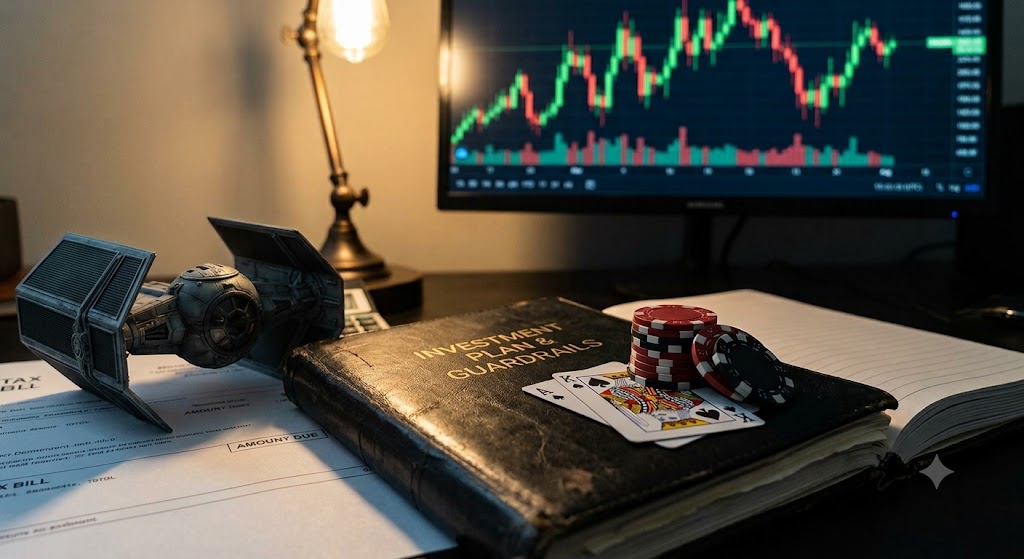
I’ve admitted to a gambling issue that keeps me away from any casino (Never Tell Me the Odds: The Dark Side of the Stress Vacuum). I have admitted to picking individual stocks (The Price of (Toilet) Paper Wealth). Both non FIRE like bad habits.
I’ve spent years engineering my way toward the retirement exit door, methodically building the pile. So why, when I am this close to the finish line, do I sometimes still try to snatch defeat from the jaws of victory?
Because the dark side of behavioral finance doesn’t care how smart your spreadsheet is.
What did I do that was so bad? Day trading, or what I call short-term swing trading.
It’s been a while since I tried to day trade. It happened a few weeks back. I placed my bets on a down day in the market. It impacted a REIT that I have been tracking that pays out a monthly dividend. So on a whim, I bought a nice size chunk in the last hour of the day to pick up the dividend being paid the next day. The stock was near the lower end of its typical trading range (I hoped) and I thought it would rebound.
The next day the market went up. My stock did also. I made a gain plus I got the dividend. I owned the stock for a grand total of 2 hours (held overnight) and made $1,600.
Nice work for 2 hours if you can find it.
So in other words, I put my money down on black and won. It was no different than a coin flip. After a down day in the market, what will it do tomorrow? Well, it could go up or go down?
The “beginner’s luck” trap is one of the most toxic setup plays in behavioral finance. Hitting green on a coin-flip swing trade doesn’t feel like a dangerous risk; it feels like free money. Winning that first hand is often the worst thing that can happen when gambling because it rewires the brain to treat an anomaly as a strategy.
It’s good I made this easy money, but it’s not good as I did it in a stupid way.
I like gambling. Winning your first time can be a bad thing. It makes you want to do more. Seems easy—what should I buy next? If I can just make $1,600 a week, that will be nice. Maybe 2 times a week?
I should be asking different questions of myself. The first one is why did I do this day trade. The answer is twofold.
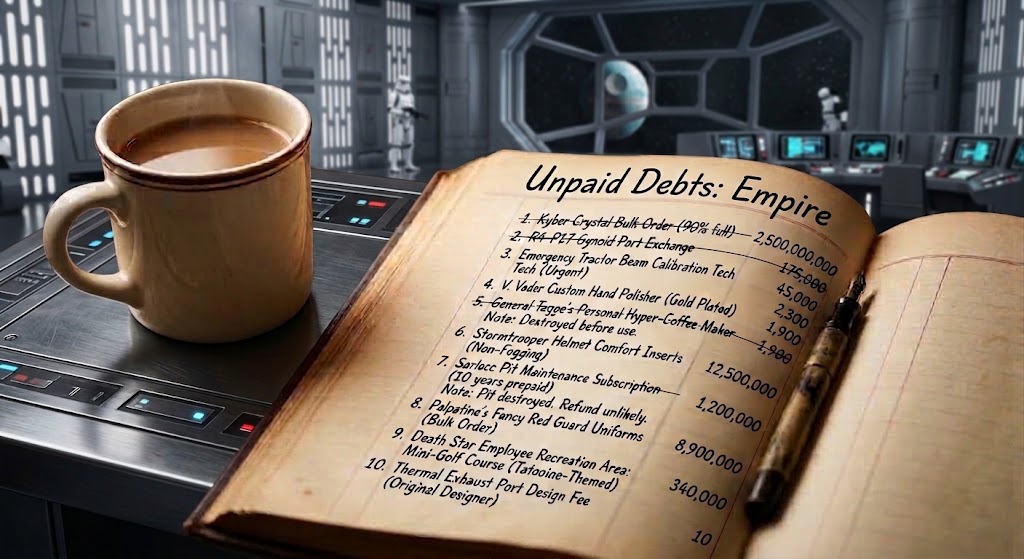
The first is I had a surprise tax bill hit me. With my layoff last year, I had 10 months of severance, which basically meant I had a full paycheck from the old empire last year. But I also worked 7 months at the new empire. Because it was a good year and neither company knew of the other, not enough income tax was deducted from my paycheque. Cue the taxman.
And I had this feeling that I lost somehow. Because I had to pay. In the end, it’s good as I double-dipped last year, but writing that check made me feel like I’d lost money that was mine. So I day traded to “get it back.” That isn’t investing—that’s revenge trading, the exact same impulse that keeps people doubling down at a cold roulette table.
So I gambled, I mean day traded, because I lost. That is a dangerous game and my math mind knows it. If losing makes me risk more to try to win, that is a very dark path to nowhere. All stop.
The 2nd question is why didn’t I just buy and own the stock since I have been tracking it. It is part of my longer-term investment plan on the income side. Well, the short answer is I do own it, up to the allocation that I want. This bet was over and above that. For a day. But that is still bad. I had my full allocation and didn’t want more. I was still gambling.
It shows I am still wary of the market. Based upon my investment plan, I have about 1/3 of my nest egg where it will be long term. The other 2/3 is in short-term bonds or High Interest Accounts. I am still looking for a better entry. I am still dollar-cost averaging in.
So because I have this cash on the sideline and a lack of trust in the market, a day trade happened. Somehow confidence or something evil found me. It means I am getting more comfortable that the market is somehow stable. Cue the market swan dive. Get out now.
But it shows I am also impatient.
So it was good I made money. But not good as it feeds the gambling side of my personality. I would be lying if I said I wasn’t looking for the next hit.
If I can just get comfortable with indexing and get more of it in, then this will go away. I know dollar-cost averaging is not the best way to invest in the market. For me, it just helps with the emotions of “what if.” And I know dollar-cost averaging does not make that go away.
I would have been way better off today if I had just made all my investment changes several months ago when I wrote my overall investment plan. I didn’t. And I am ok with that. All to protect the precious.
I tell myself I’m keeping two-thirds in short-term cash to ‘protect the precious.’ But sitting on a mountain of cash without an automated plan isn’t protection—it’s leaving an open vault in front of a known gambler / stock picker.
Gollum never risks the precious—which is exactly what I did.
Stay tuned for Part 2.

More Precious, always more Precious







Leave a Reply