

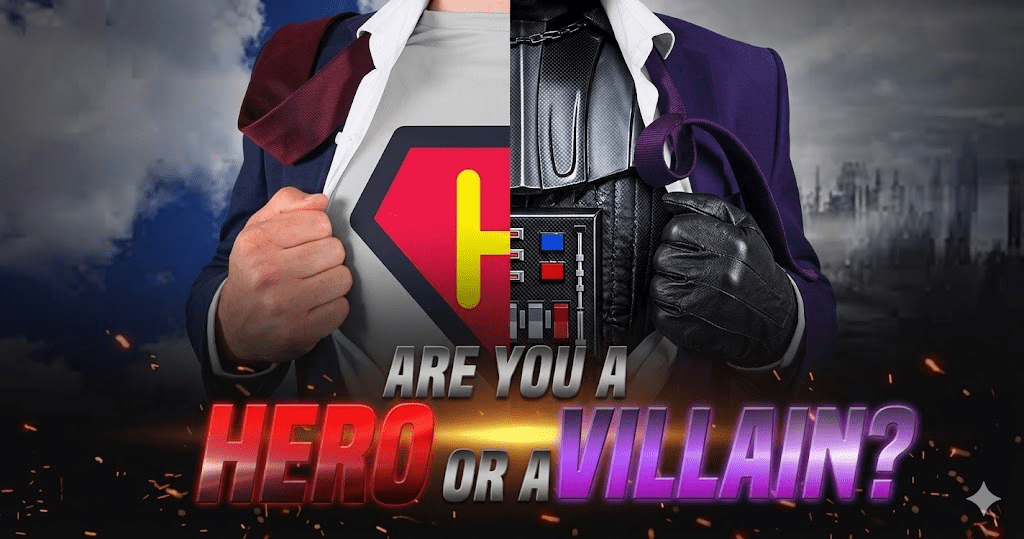
Good vs. Bad. Which one are we?
We look at the jobs or relationships we left behind and subconsciously decide if we were the Hero or the Villain of the story. Typically, there is no in-between. We are one or the other.
How we label our past dictates our inner dialogue. If we perceive ourselves as the Hero, we are free. The past settles, becoming a foundation to build upon. We leave it behind.
But if we perceive ourselves as the Villain, we carry unfinished business. These negative perceptions force us to constantly try to prove ourselves in the future, robbing us of the freedom to pick our own path. No one wants to be the villain so we struggle to somehow chance our past by being better today.
The Whispers and the Loud Noises
Words from your childhood, from your career, from anyone, are incredibly easy to internalize—especially the negative ones. I have talked about this self talk before (Words Matter: How a 23-Year-Old helped My Retirement Identity) and it is incredibly important the ones we pick or use about ourselves
We let go of the positive much more easily than the negative. Our brains keep the trauma on repeat, while our victories are relegated to a whisper.
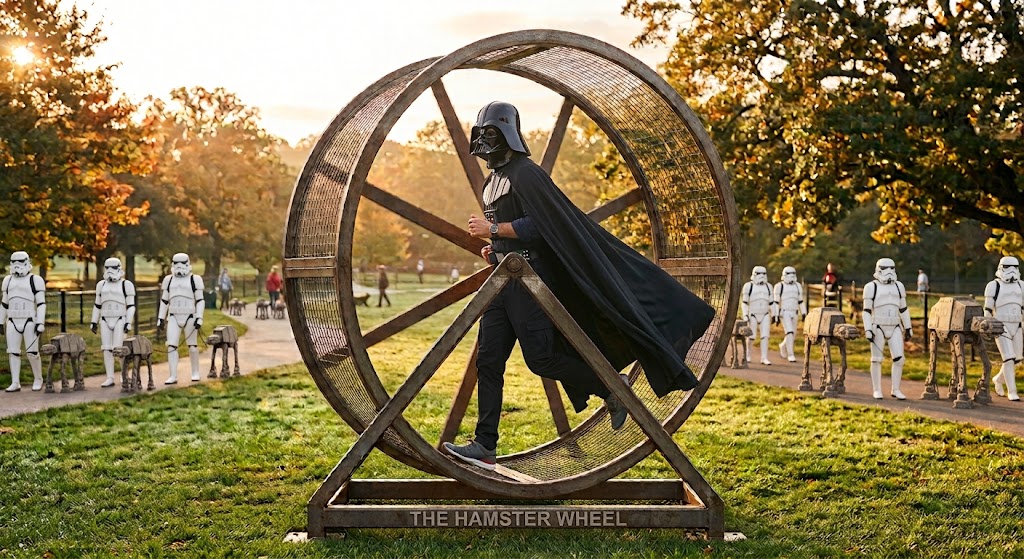
That villain perception plays our greatest failures on a loop. It’s a story running in the background of our heads—sometimes quiet, sometimes deafening—as we burn energy trying to convince ourselves or others that we were right. To defend ourselves on events that have long since passed.
When I tell stories from my own past, I can see myself caught in this exact struggle. It is far too easy to see myself as the villain, and to portray myself that way when talking to others.
The Valley of the Journey
Every classic story relies on the framework of the Hero’s Journey: the main character is called to action, faces a supreme challenge, and hits a distinct low point or crisis before transforming.
The problem is, we get stuck in these low points. We mistake the toughest phase of the journey for the final chapter. When a corporate door slams shut, we don’t see it as a structural challenge or a test of our values. We see it as a permanent ending for the story. A sign that we failed.
Take my layoff. My immediate thought in that valley? My fault. I am the reason. I am the villain.
Nowhere in that initial narrative did I talk about my goals or what I actually accomplished. I treated the layoff as judge, jury, and executioner. I let someone else decide my worth.
But the truth is, I was the hero at my last Death Star. And I need to accept that. The corporate circumstances leading to the layoff were about the Empire—not about Vader.
Owning the Hero Narrative
I delivered on every single one of my programs. I came through despite challenges that others had failed at before, delivering a high-quality product on time. But as I finished my programs, sales dried up. My team’s work evaporated rapidly.
I saw the writing on the wall. I didn’t wait for the end—I engineered a transition for my team.
I moved people into better circumstances and better jobs. I didn’t try to protect myself and leave them behind; I saved their jobs. That was my goal, and I achieved it.
The true test of leadership isn’t whether you avoid the corporate axe—it’s if you do what is right, and for me that was protecting my people. My victory wasn’t my own survival; it was their security. No one was fired. Everyone had a job to go to. Several have retired from those positions in the twelve months since I’ve been gone.
Yet, if you had asked me recently, my subconscious would have whispered villain. Because someone else held the gavel, I assumed the verdict applied to my character. I let their corporate efficiency become my personal identity.
But the facts tell a different story. I delivered 100%.
Breaking the Corporate Mirror
For decades in a corporate career, we rely on external validation—promotions, successful programs, titles—to tell us who we are. When you leave, whether by choice, retirement, or a layoff, that mirror is suddenly gone. If you don’t write your own story and own it, your transition into retirement will be a struggle.
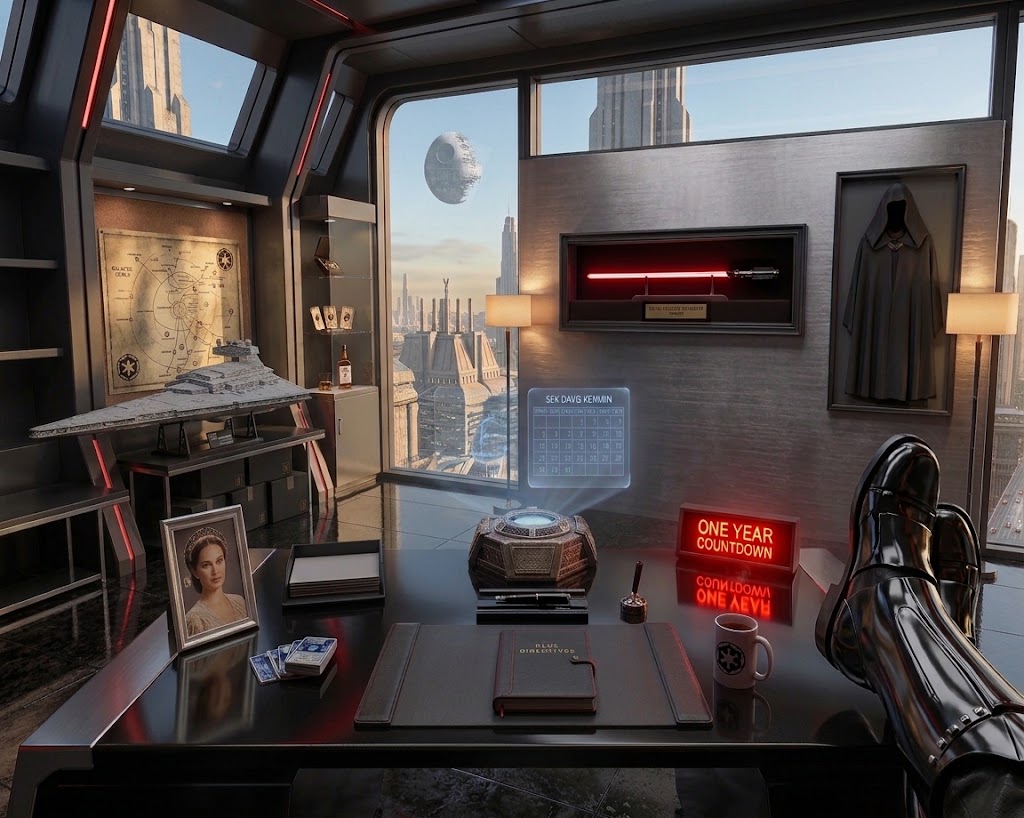
One of the biggest psychological hurdles in early retirement is the sudden drop in social status and usefulness. You go from managing teams and delivering major programs to managing a calendar with nothing on it. If you don’t have your story right before you step away, you may struggle with your identity. On who you are.
Looking back on my career—including the last Death Star and the one I am navigating now—I did what I did based upon my values. And I would do it all over again.
Cultivating the Shield
Words matter. They can be a weapon or a shield, and the words we use about ourselves are the most important ones we will ever speak.
If we don’t logically look at the facts, it is dangerously easy to let negativity rewrite our legacy. Don’t hand over control. Do not internalize someone else’s metrics. Own your impact, your story. Otherwise, we get stuck in the low points, thinking we aren’t good enough, playing the role of the imposter.
This isn’t just about surviving a corporate restructuring; it’s about how we enter the next phase of our lives. If we step into retirement carrying the ‘villain’ narrative, we bring all that unfinished business with us. We spend our newfound freedom trying to prove a worth that was never actually in question.
To truly step into retirement free, we have to close the book on our own terms.
I am the hero. So are you.
Own your story.



 vaderonfire.com
Leave a comment