
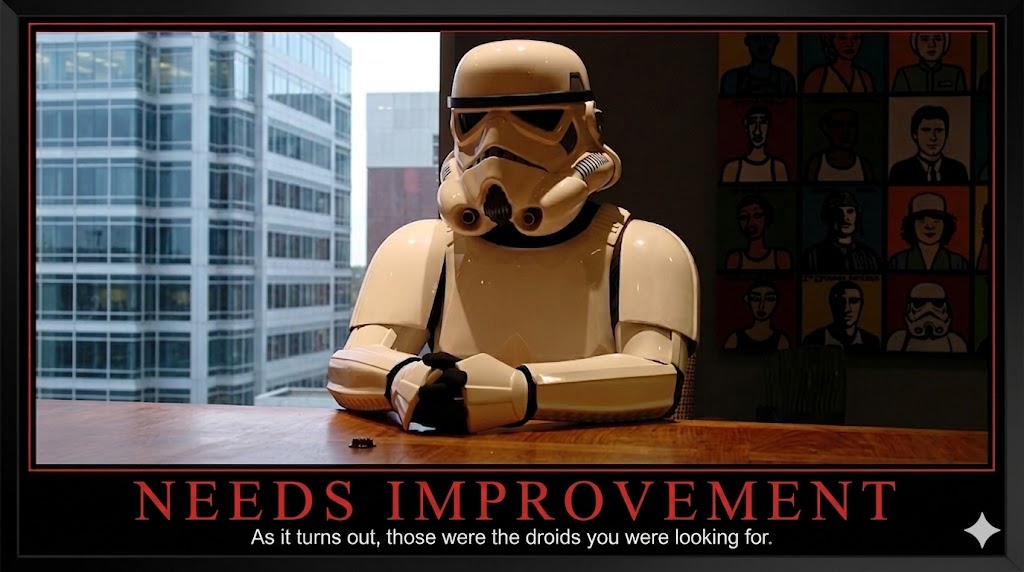
It’s that time of year again or for many just past. Performance review time
I have a secret to share for anyone still stuck in the grind: Performance reviews don’t matter.
Shocking, I know.
I looked at performance reviews exactly like the vast majority of managers do. What I’m about to say might make me sound like an ass, but every company has rules, and managers have to play by them. I gave up fighting this system years ago.
Everywhere I’ve managed, the process was the same: I determined my employees’ ratings and raises before I even looked at their self-evaluations. Salary increases and bonuses are finalized long before the paperwork is finished or a single word is written.
Usually, there is a department budget I have to stay within or a bell curve I’m forced to apply. Typically, only 15% to 20% of people can be “above average.” The remaining 80% get the “average” mark, which translates to a predetermined cost-of-living increase. Sometimes, I’m even forced to put 5% or 10% of my staff in the “below average” category. The people who get the high raises get them every year—they are the ones I don’t want to leave.
If you get a below-average mark, it’s a clear message: I want you gone. It is the simplest way to get a message across.
How I Actually Do It
I start by looking at salaries to ensure they are fair across the board based roughly on your role and your age. I typically try to give a larger percentage increase to those with lower salaries because they have a smaller base. A lower percentage raise for a high salary still results in a higher cash raise than a high percentage raise for a low wage.
I make sure the people who do the heavy lifting—my “core”—are treated well. Sadly, it also depends on whether I like you. It’s about me and the department getting the work done; if you are key to that, you get rewarded. My life is easier if you stay.
However, if you do great work but I don’t enjoy spending time with you, it will impact your raise. If you can’t be nice to your boss, you’re likely even worse with your peers or customers. Yes, it’s a little like high school.
The “10-Minute” Rule
I put exactly zero regard into your written objectives or the justifications you write to prove what you deserve. The work is already done. I know how you’ve performed; if you’re trying to convince me now, it’s a sign you aren’t that good.
It’s a game. All companies do it. HR provides a budget and a bell curve. You stay within it and you don’t rock the boat. If I try to get more for my team, I’m essentially stealing from another department, and it’s not worth the fight. Trying to go outside the guidelines just means more work with a very small chance of success. Remember, if I’m receiving a budget, it was likely decided two or three months earlier.
How much time do I spend on your review? Ten minutes. I write it quickly and keep it generic. There’s nothing specific and nothing bad in it—unless I want you to leave. On the flip side, I spend ten minutes on my own write-ups if I know my manager, or twenty if I don’t, just to stay within the HR rules in case they are “by the book.”
The value of going through the motions of these reviews is exactly zero. It should simply be: “Here is your raise. No arguing. It was set weeks ago.”
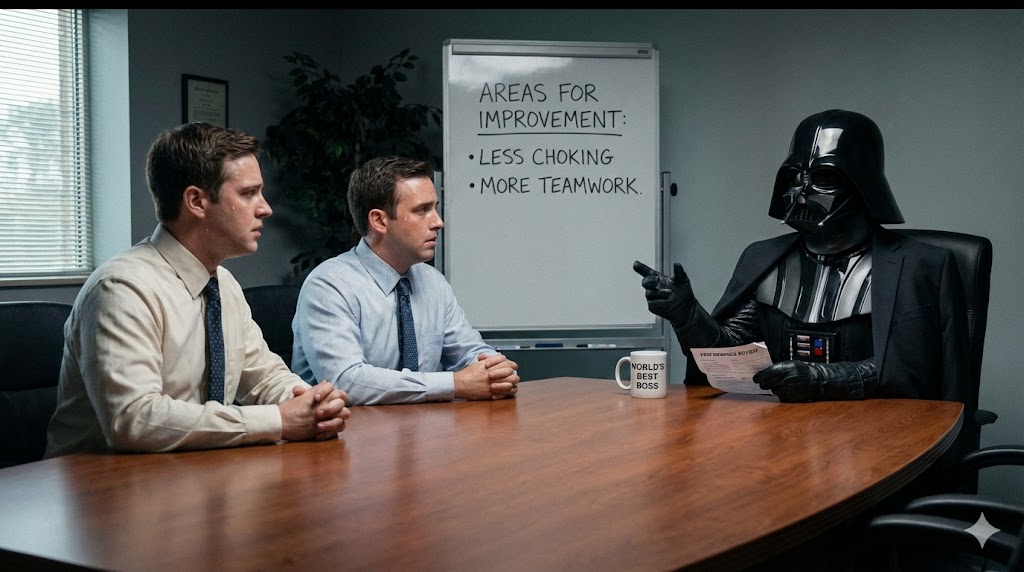
Making It Fun
When I trusted the people working for me, I got creative. For one newly married employee, I asked what her husband made at his company since they were the same age. I wanted to pay her exactly one dollar more than him. She told me the number, I made it happen, and she was ecstatic. It fell right within the range of what I could do.
During her next promotion cycle, I gave her a raise over the course of seven days. Each day was a puzzle to figure out the amount. One day was +$1,010 written in the Greek numeric system; the next was +$200 written in Japanese. It was fun, though with the wrong person, I probably would have been reported to HR.
At my last “Death Star,” I used my relationship with HR to have fun with my core staff’s reviews. I wrote their evaluations using specific themes tailored to them:
- One manager’s review was written entirely using Country Music song titles.
- One had a Star Wars slant.
- One used Judo terms to match his hobby.
- One used audiophile lingo.
- One used “Tim the Toolman” Taylor quotes from Home Improvement.
It at least made the process bearable for us.
The Rotation
I was forward enough at my last job to tell my core team what their ratings would be a year in advance. Since I could only give “great” raises to two or three people per year, we took turns. I’d tell them: “This year is your turn; next year is not.” They knew the deal upfront. Because I had hired them at the highest possible salary to ensure they stayed, they knew they were treated well, and the rotation worked perfectly. No stress.
I think I am unique in my “Vader-esque” way of not giving a crap. My own reviews—some average, some high—offered no value. I liked the raises, but the process was a pain, especially if my manager actually took it seriously.
Even with my efforts to make it fun, the system is still meaningless. Everything is predetermined. I just stopped playing the game whenever I could.
I will not miss doing, or receiving, performance reviews.
I protect my ‘JEDIs’ by rotating the high marks so they get their due. It’s not perfect, and it’s certainly not what the HR manual describes, but it’s the only way to stay human in the shadow of the Death Star. I have very few of these reviews left, this may be the last one before I hang up the cape. Until then, I’ll keep my write-ups to ten minutes, my raises fair, and my cynicism intact.
My parting advice to any employee about raises – the best raises come when you move positions. Negotiate hard in these times. Once in a new position the game will start again.
The game goes on—but at least I know it’s a game.

its me (and the system) – not you
Just a note for those who have found my blog. I have been doing a post twice a week for a while. As spring has sprung I will be dropping down to my frequency to once a week, maybe more depending upon how often I go to the gym…
Best way to know when there is a new post is to enter your email below









Leave a Reply