
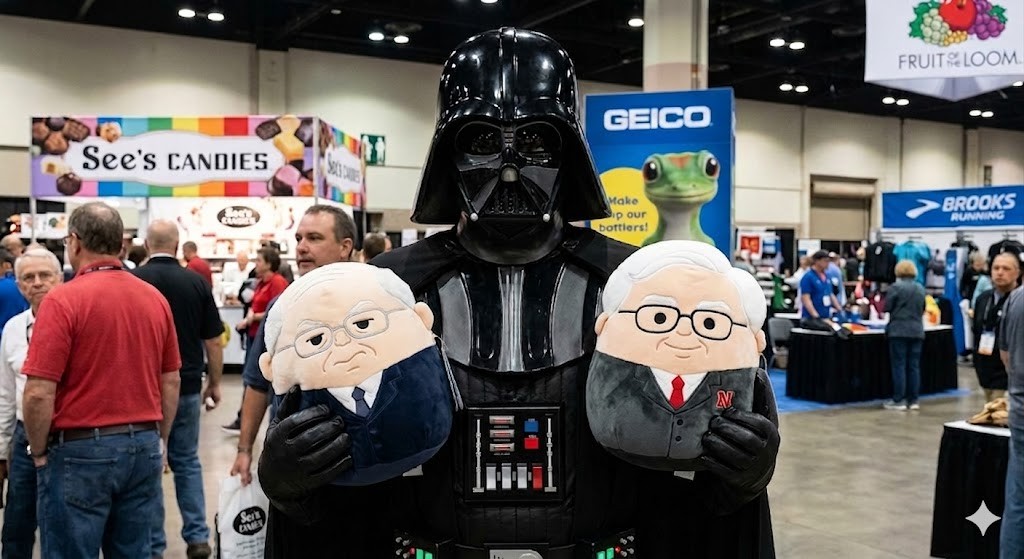
This year marks a historic shift for Berkshire Hathaway. For the first time, Warren Buffett will not be presiding over the annual meeting, having retired from CEO at the age of 95. Typically, on the first Saturday of May, this upcoming weekend, roughly 17,000 people descend on Omaha, Nebraska, for an event famously known as the “Woodstock for Capitalists.”
I have always been intrigued by why people make this pilgrimage to a business meeting. In the corporate Empire, Berkshire is a rebel system. We rarely see a billion-dollar ecosystem built on such simple, quiet principles that Warren and Charlie talk about and live.
I have a friend who has been going to the meeting with his father for 18 years, and I’d always told him that if his dad ever decided to sit one out, I’d be happy to fill in.
I had my chance at Charlie Munger’s last meeting in 2023. In honor of Warren and Charlie, I thought I would capture what that experience meant to me and what I learned
Inside the Berkshire Ecosystem: A Index fund by Warren and Charlie
I am glad I went. I had a great time, and I finally understand why people make the trip. In away, the meeting was a celebration of success, but also of a very specific way of looking at the world.
I arrived with no real expectations. I had seen the sound bites over the years, but I didn’t truly understand Berkshire as a company. That changed on Friday which is the dedicated “Showroom” or shopping day. Walking into the hall isn’t just walking into a meeting; you are entering a massive trade show of Berkshire-owned companies.
The scale is shocking. You see modular homes from Clayton Homes on one side and Squishmallow stuffed animals right next to them. There are Dairy Queen Dilly Bars for sale and Justin’s cowboy boots just down the aisle. If you’re feeling active after all that ice cream, Brooks shoes has a major sale going on. Forget some clothing, Fruit of the Loom can hook you up with essentials. You might even be tempted to grab some Ginsu Knives or Pampered Chef cookware. For those who invested early enough with Buffett and Munger you can afford the ultimate luxury, there are NetJets private planes to get you home.
It was eye-opening to see the breadth of what they own. While Berkshire is technically a conglomerate, it offers a level of diversification that rivals a broad index fund, but with the surgical intentionality of every business being hand-selected by Charlie and Warren.
The Power of Moats and Cash Flow
They focus on finding cash-producing businesses that are well-established with a “competitive moat”—a brand or a low-cost overhead structure that fits their investment style. Think about Ginsu knives, once the kings of the infomercial. Most of us remember that knife cutting through a can and then cutting a tomato. Or of Pampered Chef, a Multi-level marketing (MLM) party-plan business. A modern day version of the Tupperware party. Both are low-inventory and low-storefront operations, meaning low capital requirements. Both Berkshire Hathaway companies.
Seeing these brands, many of which seem “off the beaten path” for typical corporate conglomerates, helps you see the secret sauce. They all seem unique in some way.
Before I left for the day, I made sure to get my “Card-Carrying Capitalist” card—a symbol of belonging to and appreciating this unique company.
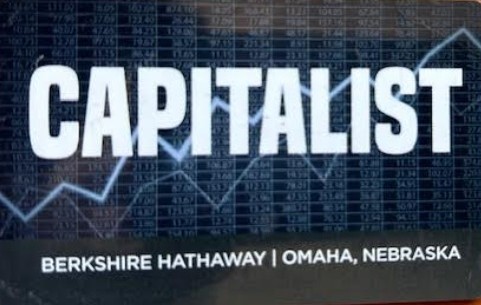
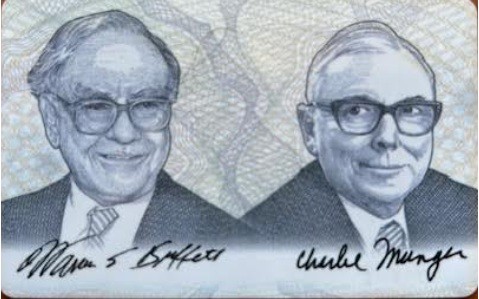
Official Berkshire Hathaway ‘Capitalist’ card from the annual shareholder meeting
The showroom offers a look at the everyday businesses they have bought over the decades. Overall, they own over 180 private businesses and quietly add a few large ones and dozens of smaller ones every year. Of course, they also invest in public giants like Apple and Coca-Cola, but every acquisition is viewed through the same lens: cash flow, uniqueness, and moats.
The People Behind the Money
At its core, Berkshire Hathaway is about one thing: making money. But it isn’t just about the cash a company produces; it is about finding the right “owners” to run those businesses. Warren and Charlie don’t actually run the companies they buy. They find a profitable business run by good people, and then they invest. A successful business needs both the capital and the right human beings at the helm.
Why the focus on people? Because Warren and Charlie want to do what they do best: sit around, read, and evaluate companies. The last thing they want to do is tell one of their managers “how” to run their day-to-day operations.
It is staggering to think that the parent company of Berkshire has only about 27 people in its head office. That skeleton crew oversees a $1 trillion market value company with over 380,000 employees globally.
The Omaha Ritual: 5:00 AM Lines and Warren and Charlie do Comedy
The most famous part of the weekend is the Saturday presentation. People start lining up at 4:00 or 5:00 am in the morning to get good seats for when the doors open at 7:00. I never expected to be standing in line before sunrise for a business meeting, but the anticipation added to the experience.
The day opens with a professionally produced film. In 2023, it included clips of people asking Warren who would take over for him—questions that started back when he was 60. Now in his 90s, the video had a lot of fun with his past responses and facial expressions. The other highlight was a sketch featuring Warren selling Ginsu knives to Jamie Lee Curtis, who seemed to only have a “thing” for Charlie and was looking for an introduction.
It was a comedy sketch starring two of the world’s richest men and Hollywood cameos. It is a brilliant stage-setter that shows they are real people who don’t take themselves too seriously.
The Main Event: Unfiltered Investing Advice from Buffett and Munger
The “presentation” itself is effectively a five-hour, or more, unscripted dialogue. The questions are curated by a panel of journalists or drawn from the audience via a lottery system at the microphones. Warren and Charlie answer everything on the spot—no slides, minimal prep, and people have free access to whatever is on their minds.
The questions touched on the economy, tech stocks, and the banking system. Warren handled the bulk of the technical questions, with sharp input from Charlie. The best line of the day came from Charlie when they were asked about the impact of AI: “I think old-fashioned intelligence works pretty well.”
Watching high-level improv from two billionaires in their 90s, with cameras hanging on their every word in front of 17,000 people, was truly amazing.
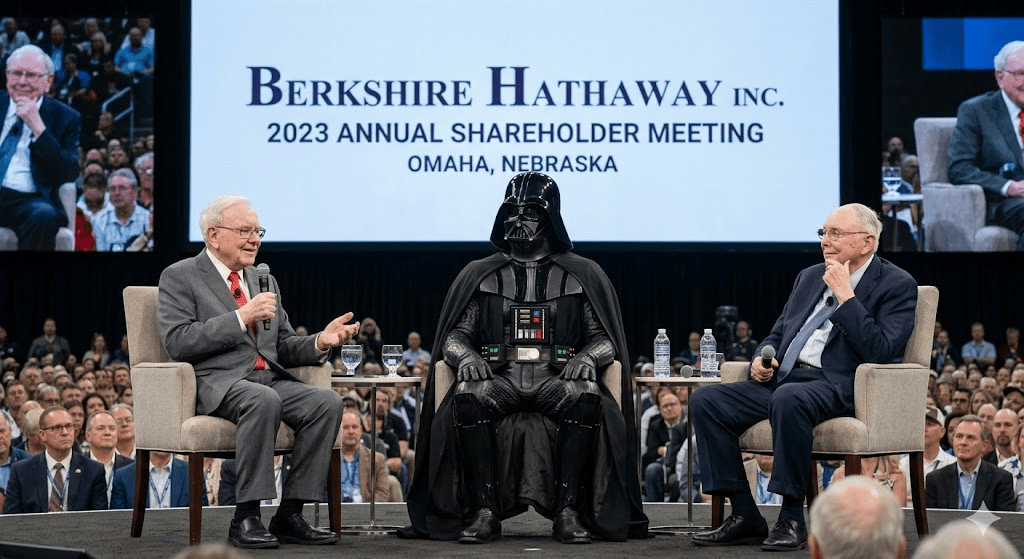
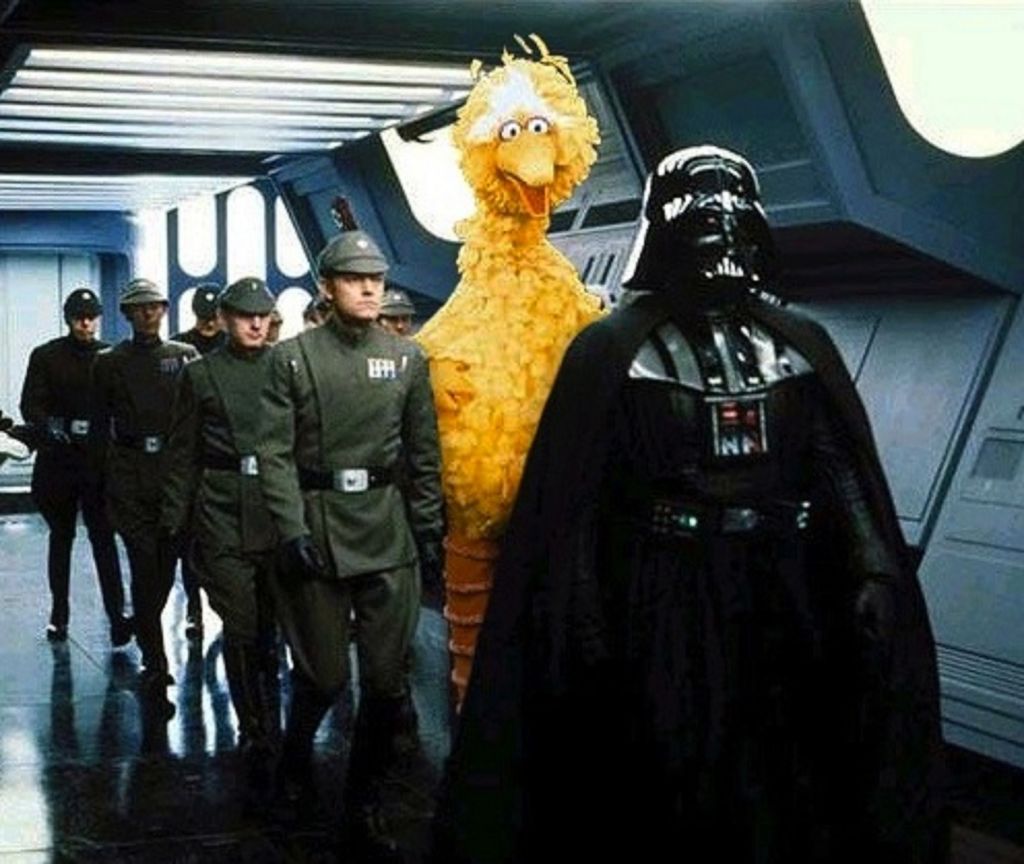
Comparing notes on who built a bigger Empire
The Inner Scorecard vs. The Outer World
After the Q&A, the meeting moves to the formal legal portion. Several groups use this as a platform to push for Berkshire to become more “Main Street” or political. One example was a proposal on diversity and gender reporting in management.
Warren, in his straightforward way, answered that they hire the best people. He argued there is no need to measure them on anything besides the businesses they run, and that doing so would simply give external people power to complain about their internal processes. It’s about doing the right thing for Berkshire, not the right thing for every external group. They buy businesses after reviewing the people. Why buy the company and change the leadership team that has been successful for an external metric?
The resolution was voted down.
In the end, Warren and Charlie architected a common-sense approach to business. They like who they work with, they think for themselves, and they do not bend to outside opinions.
They focus on doing what they think is right, because that is who they are, not because it is a trend. Because they have this “do it right” attitude, they do not worry about being judged.
This brings to mind one of Warren’s most famous quotes:
“The big question about how people behave is whether they’ve got an Inner Scorecard or an Outer Scorecard. It helps if you can be satisfied with an Inner Scorecard. I always pose it this way: ‘Would you rather be the world’s greatest lover, but have everyone think you’re the worst; or be the world’s worst lover, but have everyone think you’re the greatest?’”
Key Takeaways for Your Own Portfolio Allocation
So, did I learn anything about investing? Absolutely. A massive reason for Berkshire’s success is their laser focus on capital allocation. They have consistently kept a minimum 20% to 25% of their value in cash invested in US Treasuries, even during periods of extreme low interest. They do not overreach to chase small returns. It remains liquid, ready for opportunities, and serves as a cushion for bad times.
They also strictly allocate money based on risk. For instance, they have $15 billion of insurance exposure in Florida, but that represents only 5% of their total insurance portfolio. If a catastrophic hurricane season hits, it is only a 5% risk to the whole. They will not overreach in any one position. The only exception is Apple, which became a giant part of the portfolio due to fast growth—though they have since been trimming it back.
The key point is this: they split up the pie to an allocation and stick the capital inside those guardrails. The only times they overreach are in extreme moments, like the 2008 banking crisis, when they can secure a once-in-20-year return.
A Celebration of Simplicity
I finally get why people go back to Omaha. It is a celebration of simplicity, common sense, and two men living their lives on their own terms while still thinking of others. Warren and Charlie aren’t showy; they just seem real.
They still feel like small-town guys who stayed grounded despite being billionaires. I realized that they weren’t just teaching us how to pick stocks; they were teaching us how to pick a life. They chose rationality over envy and simplicity over complexity.
As I transition out of the my ‘Empire’ and into my own version of retirement, I’m taking Charlie’s lead: Figure out the allocation, set the guardrails, and—as a wise man once said—stay on target.
To the next chapter
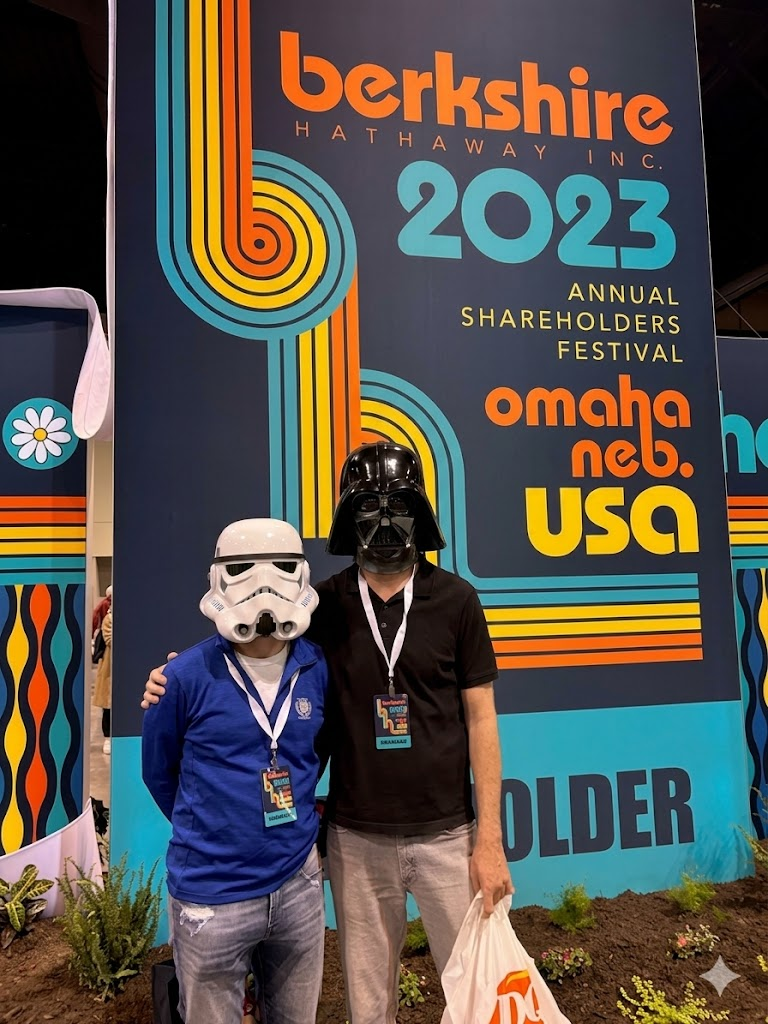
we will miss Emperor Warren and Lord Charlie





Leave a Reply