
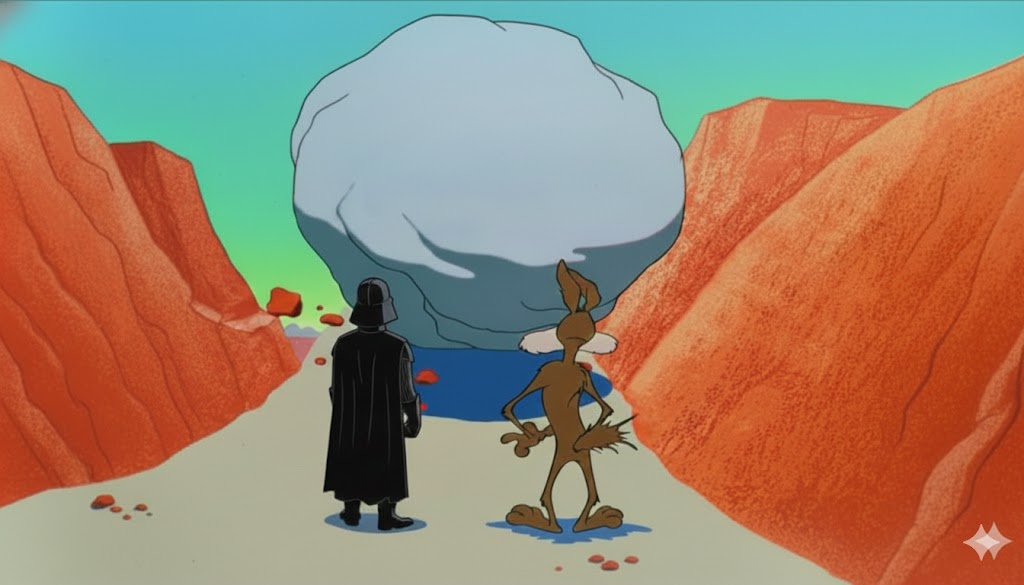
You can sense them. We all have this skill after a few years of work. A powerful feeling of knowing when a project is doomed regardless of what you do. These projects exude failure. You don’t need much experience to know something is fundamentally off.
These projects are not the “feel good” corporate flavour of the month, kumbaya, programs that we all know will disappear. These projects actually are important real work but just have no possible chance of success and waste real money and time.
For example:
- Cutting in a new planning tool that will take 3 years to implement – Doomed
- Replacing 15 Software tools with 1 – Doomed
- Building an electric vehicle from scratch when we don’t build vehicles – Doomed
A doomed project hasn’t been given enough thought. It has no clear definition. It has no constraints. The project goals keep expanding. The specifications keep morphing or worse are not known. The project hasn’t been given the right leadership. Often times these projects are not part of what we typically do.
Crucially, there is no one person truly in charge on these projects. This is almost by design, making it impossible to assign the blame where it belongs later.
Pushing the Boulder
I have been put on a team in the last few weeks on a project that feels exactly like this. I’m putting on the management face and pushing the proverbial boulder up the hill. Everyone on the team knows the boulder is going to roll back; it’s just a matter of when. My job now is to ensure my team does its part so we aren’t the ones crushed by the rolling rock.
We just need to ensure there are enough bodies between us and that rock for it to stop before it gets to us.
Or, to put it another way: we don’t have to outrun the bear. We just have to outrun the slowest person on the team. My job takes on a new role. To not be painted as the reason for the failure.
The Recipe for Disaster
The specific project involves implementing a new data exchange with an external customer. This means picking multiple software packages, integrating them, and forcing the unstructured customer data along with our own, differently formatted, data into the new tool. This project is a consultants dream as its endless, boundless, and horribly complex.
We have already wasted money on this for two years. There have been several false starts and much time and money wasted. And now, we’re on our last kick at the can (hopefully). Why will it fail? Because it still has:
- The same team and leaders that have been failing for two years.
- A schedule that has been sliding for over a year.
- A customer who really does not know what they are buying or what they want
- A project team that is defining specs for each department without talking to them
The Inevitable Bang
What makes this truly painful is that it won’t go away with a whimper; it will go out with a bang.
Senior executives have finally realized they are close to losing the Customer Contract and the revenue they had counted on to meet their yearly numbers. Now, they take notice—not 18 months ago when it was missing every single milestone.
What is their solution? They call a meeting. And they yell. We basically get : “This Major Milestone absolutely must be done by Friday. Everything you’ve done to date is wrong. Fix it. No excuses.”
Add in some colourful language and twenty more minutes of ranting and you get the picture.
Now, we all know how this ends. Someone will take the fall. Maybe several someones. We all know it is coming; it’s just a matter of time.
Watching the senior executive with the throbbing forehead vein storm into a meeting and throw his toys is both sad and demeaning. Where was he when the project needed help or direction? Do you think demanding it be done in five days, after it hasn’t progressed in two years, is suddenly going to make the difference?
The amount of stress inflicted until the project falls off the rails affects everyone. Half of the people are pointing fingers. Most of the other half are trying to hide. A few are trying to fix it when there is no hope. I am currently standing in the splatter zone. Cue the soon to be throat choking blame.
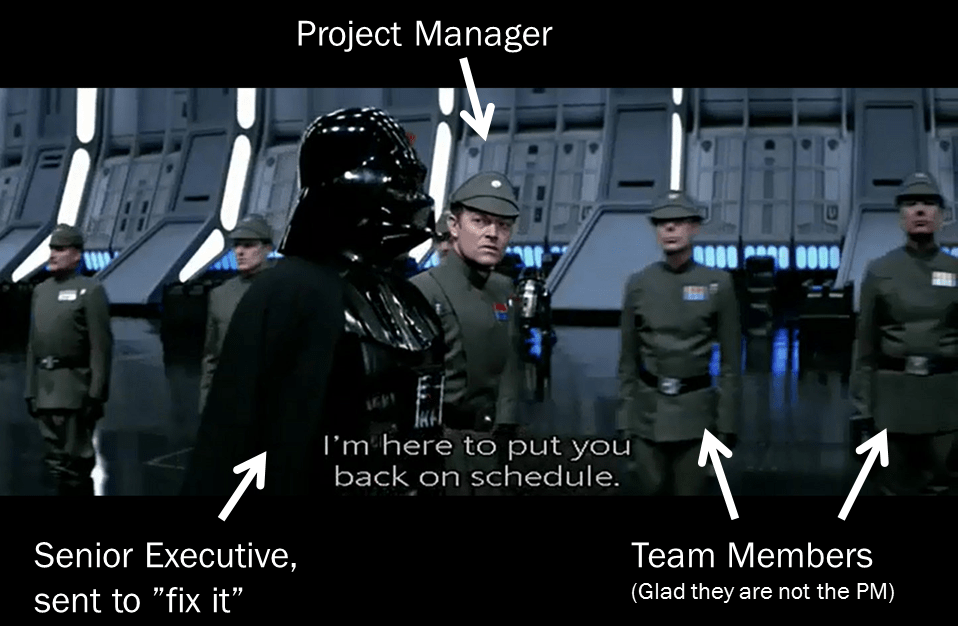
I will push my team to execute our part, but the failure truly happened upstream: in the project definition, the project management, and the team construction.
Who is really at fault? Likely the Senior Executive bursting a forehead vein. And deep down, he likely knows it.
This failure is a predictable consequence of his management style. He doesn’t like to get involved, doesn’t like to get his hands dirty, and doesn’t want to hear what’s really going on. He is near the end of his career and honestly should have retired years ago. But he is here to do the “fun exec stuff.” To ride out his last years while getting paid well. The hard stuff is for someone else to do—his minions. Therefore, this failure must be their fault.
I won’t miss seeing this type of management. The abuse of people under them is second nature. Whenever they feel threatened, they lash out. Whenever something goes wrong, even if they had a hand in it, other people suffer.
These are the Senior Execs who got to where they are not just because they are smart, but more importantly, because they have the right contacts. They are part of the old boys’ club. They didn’t work their way up the ladder by doing the right thing. They inherited a role based upon their rolodex.
This behavior happens near the top in most companies. It has been years since I worked somewhere that I haven’t seen this behavior. When insecurity and entitlement replace real leadership, projects typically end in failure . This type of management doesn’t just destroy projects; it poisons company culture and drives good, competent people away. I won’t miss these leaders.
I definitely won’t miss standing in the splatter zone when I retire.
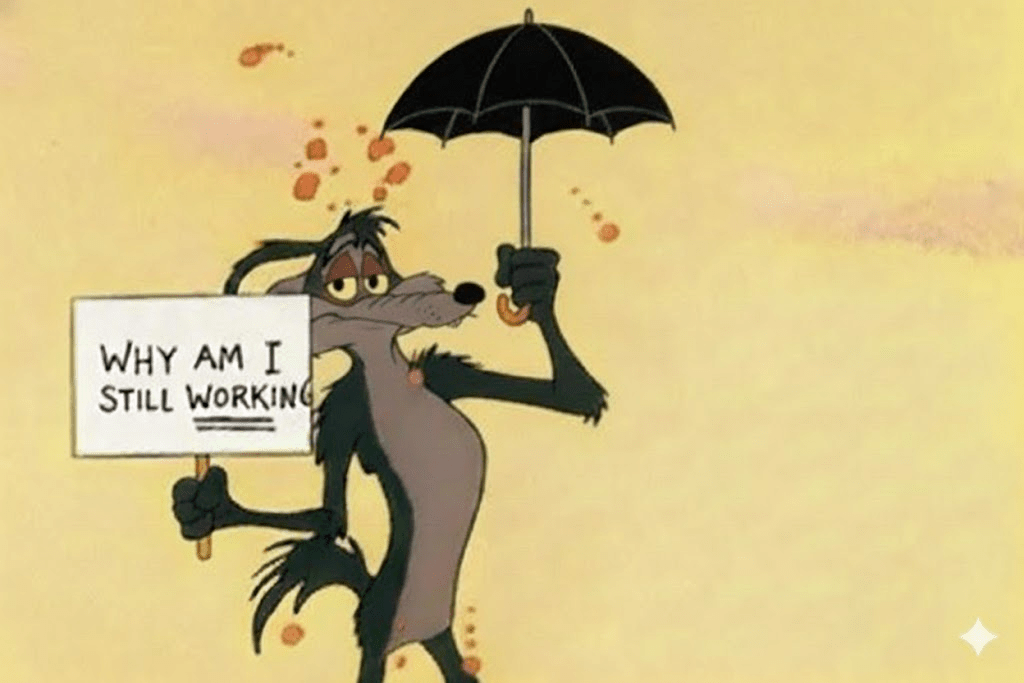
I might need a bigger umbrella on this project








Leave a Reply