

If you a new or recent reader this blog is half stand alone posts and half a continuous story on my OMY to retire. It is best to start on the first post here – Let there be Light (saber). Onwards
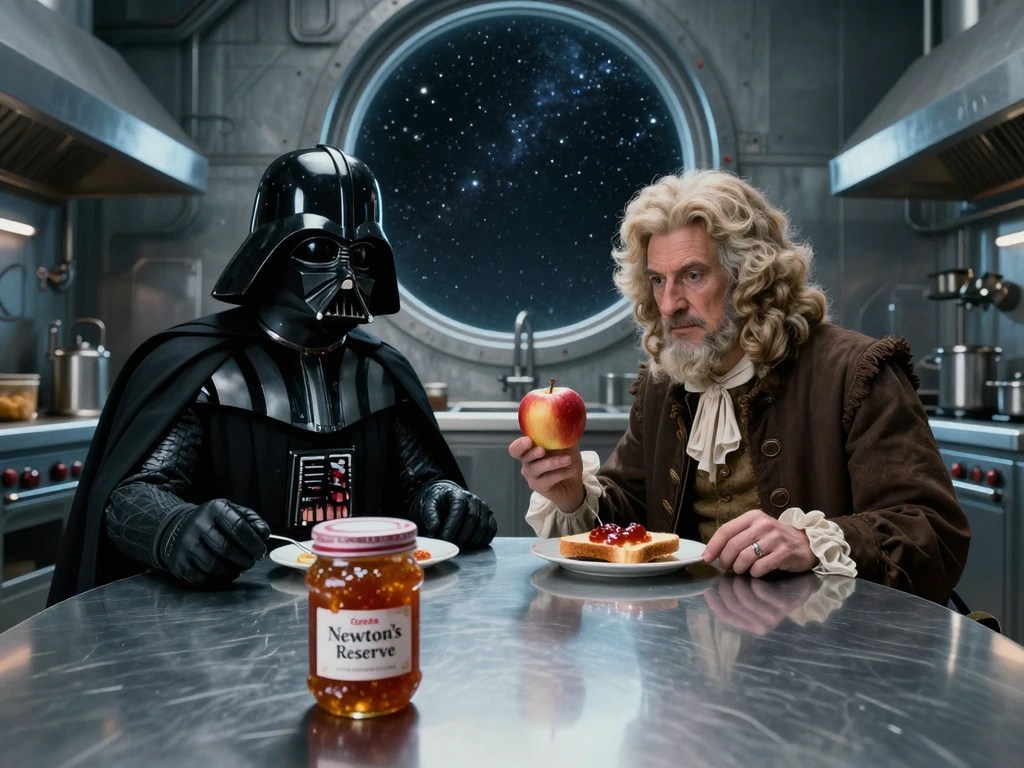
I’ve always been a creature of habit. Some people call it discipline; I call it Vader’s First Law of eMotion. Today is the start of a three-part series on Vader’s Three Laws of eMotion in Retirement.
Vader’s First Law of eMotion
A retiree at rest will stay at rest until an external event acts to change his emotion or mood. If a retiree is in a bad (or good) emotional state, the retiree will remain in that mood until an external emotional event acts upon him.
The “rest” isn’t just physical; it’s a stagnation. Without an outside force to shake the snow globe of my life, I will simply settle. Once I start—or more importantly, stop—something, it is hard to switch states. I am mainly affected by a lack of inertia or momentum. Whatever I am doing, I likely will continue doing.
For example, if I eat dinner and get into the habit of going downstairs to watch some TV, then that will be my routine. For months. Until some external outside force shakes up my routine. It is just how I function.
Get up at 6:00 AM every day? Yep, every day. I can’t help myself. Eat toast for breakfast? Yep, every day. I find my emotional state helps drive my routine, but my routine also reinforces my mental state. They feed on each other.
If I am in a crappy “Sunk in the Funk” mood, I can stay in that same mood for days. When I am like this, it makes me a couch potato. A lump. Which reinforces the mood. Emotion and physical movement are linked; I know it. But knowing it does not make it easier to do anything about it.
Today, this trap of lumpiness is broken up by work. Throughout my career, my habits were dictated by the “External Force” of a paycheck and a calendar. I got up at 6:00 AM because I had to. I drove to work at 6:45. Drank my coffee at 7:15 AM because that’s what happened next. I was an object in motion, kept in flight by the massive gravitational pull of a 40-hour workweek.
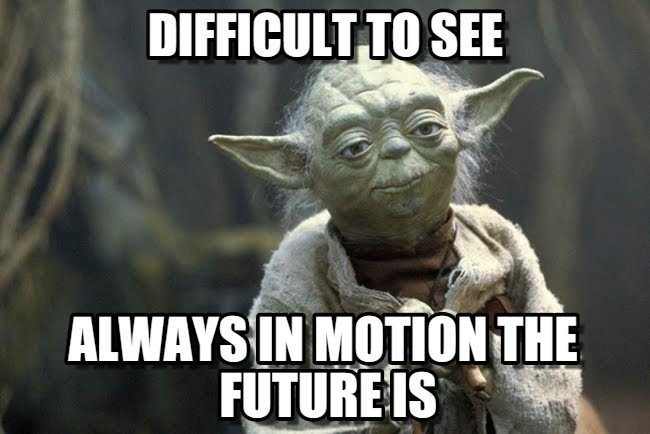
But as I look toward retirement, I’ve realized something terrifying. When that external engine stops, my internal physics don’t change—only my direction does. If I stop, I stay stopped.
So, I know I need to work on this bad habit. I need to figure out how to improve both sides of this coin—the emotional and physical state—to be able change my state myself.
The Feedback Loop: The Couch vs. The Mind
I’ve noticed that my emotional state and my physical routine are locked in a symbiotic, often toxic, embrace. They feed each other.
When I’m in a “lump” mood, I head downstairs after dinner. I sit on the couch. I turn on the TV. This routine enforces the mental state. Because I am sitting, my brain decides we are in “Low Energy Mode.” Because we are in Low Energy Mode, the idea of getting up to work on a hobby or go for a walk feels like a violation of the laws of nature.
For months, this can become the “New Normal.” I’ve seen it happen. I’ve lived it. When I eat toast for breakfast every day, I will likely do it for months. I don’t do it because I love toast; I do it because the “Object at Rest” (my brain) finds it easier to repeat the past than to invent a future.
The Vacuum of Retirement
The danger of retirement is the sudden removal of “Friction.” In the working world, there are constant “External Forces” acting upon you: a boss’s email, a meeting, a deadline, a commute. These forces keep you moving. You might be exhausted, but you are an object in motion.
When you retire, that friction disappears. You enter a vacuum. If you sit down on Monday morning with no plan, Vader’s First Law takes over. By Wednesday, you’re still in that chair. By next month, that chair has become your cockpit, your dining room, and your destiny.
Identifying the “External Forces”
If the law states that we won’t change until an external event acts upon us, then the secret to a successful retirement is manufacturing those events. We can’t wait for a lightning bolt of inspiration to strike us; we have to build the lightning rod.
What qualifies as an External Force?
- The Social Anchor: This is the most powerful force. If I promise a friend I’ll meet them for a walk at 8:00 AM, my “Inertia of Laziness” is hit by the “Force of Social Obligation.” I get up because the external world expects me to.
- The Environmental Shift: Sometimes, the external force is simply a change of scenery. If I am stuck in a funk on the couch, the “External Event” might be as simple as a spouse telling me to go to the grocery store. The change in air, light, and movement breaks the physical state, which allows the emotional state to reset.
- The Scheduled Disruption: Habit-driven people like us need “interrupts.” This could be an alarm on a phone, a scheduled class, or a volunteer shift. These are the “unbalanced forces” that knock us out of our stagnant orbit.
The Knowing vs. The Doing
Knowing that emotion and physical movement are linked doesn’t make it easier to get off the couch. I can sit there, fully aware that I am a victim of Vader’s First Law, and still not move. That is the power of inertia. It is a physical weight.
But awareness is the first step toward “Engineering the Impact.” If I know I am a creature of habit, I have to make my habits work for me rather than against me. I have to start the “Motion” phase while I still have the energy to do so.
Once I am in motion—once I am a retiree who gardens, builds furniture, or travels—Vader’s Law works in my favor. I will stay in motion. I will continue to be active, not because I have a sudden burst of willpower every morning, but because “Activity” has become the new state of rest.
Conclusion
Retirement isn’t the end of the journey; it’s a change in the laws of physics. We go from being pushed by the world to having to push ourselves. It is a shift from kinetic energy provided by others to potential energy we must learn to release on our own.
If you find yourself stuck in the “Funk at Rest,” don’t beat yourself up. You aren’t lazy; you’re just following a law of the universe. The trick is to find an external force—a person, a place, or a purpose—to give you that first, crucial nudge.
Once you’re moving, you’re golden. Just don’t sit down for too long after dinner. The couch is a high-gravity environment.
Isaac, go for a walk so you can stop focussing on the damn apple



 vaderonfire.com
Leave a comment