

When I was a smaller cog in the corporate machine, I assumed the people in the C-suite were special. I viewed VPs as strategic titans—people with a rare talent, a “secret sauce,” and the keys to the kingdom. To my younger self, they could do no wrong.
Early in my career, executives just sounded smart. They dressed well, spoke with authority, and seemingly deserved their status. I believed they had put in the hard time, proven their worth, and were now in the perfect position to make the critical decisions that push a company forward.
I put them on a pedestal. In my mind, they were celebrities.
I was fortunate enough in my late 20s to be part of a team where I saw some “heavy hitters” in action. We were designing and launching an internet equipment product for a Fortune 500 company. On that team, you couldn’t shake a stick without hitting a Director—Director of Product Management, Director of Hardware Engineering, Director of Program Delivery, and Director of Software Engineering. All with significant teams behind them.
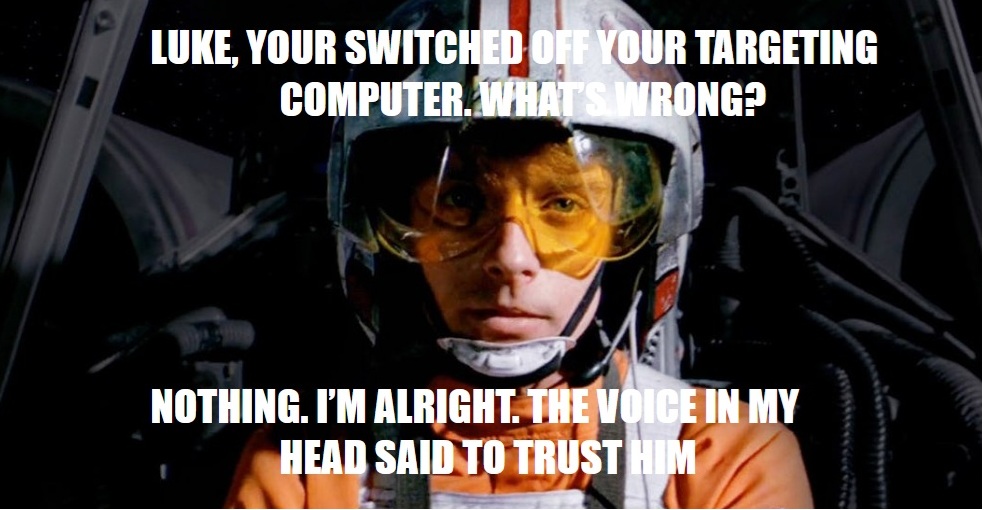
At one point, they realized they needed a manufacturing prime on the team to actually build what they were designing. Since manufacturing wasn’t considered “important,” they decided it didn’t need to be a Director-level Role. Who is the project co-ordinator at the factory? Vader – great, come to all our meetings. Don’t speak
But then I watched something incredible happen. This was the best senior team I’ve ever seen. Despite their titles, they were “sleeves rolled up” leaders who knew every technical detail. They ignored the hierarchy and treated me as an equal.
They listened because it wasn’t about egos; it was about getting the best product out the door. It didn’t matter that I was young and just an engineer. I was the manufacturing expert they needed.
My impression of leadership soared. I thought: If Directors are this good, the VPs and C-Suite must be absolute rock stars.
That project launched my career. A few years later, I became a Director at a high-tech startup. This was my first real exposure to the “upper echelon.” The founders fit the bill: high intellect, visionary, and seemingly next-level thinkers with pedigrees as long as my arm. They were charismatic in the room, and I felt I had finally made it to the inner circle.
At the Director level, we were the ones getting the detailed work done. The founders stayed out of the day-to-day, focusing on finding customers, making sales, and securing financing. These were the “executives” I had always worshipped.
We were chasing our next funding round when 9/11 happened. Industry funding dried up overnight. VCs stopped lending without proof of growing revenue and profit, and our company only had months of cash left. Suddenly, the corporate buzz-speak evaporated, replaced by raw panic.
I soon realized then that the founders had been lying to the staff for months. There was no customer traction; we had “slideware,” not a product. Our “secret sauce” never worked. We were operating on smoke and mirrors, playing a game of “The Greater Fool” in hopes of a quick buyout.
For the first time, I saw executives who were in it for themselves rather than the company mission. They could fool investors and employees as long as the money was flowing, and I watched it all unfold as the wheels fell off. I, like all the employees, had drunk the Kool-Aid, only to realize it was poison. It left a bitter taste, and I haven’t fully trusted a leadership team since.
My next opportunity was joining a small tech company as a VP. This company had real customers and actual cash. I was finally in the inner circle, convinced I would see real executives making real decisions with no wool over my eyes. We struggled through a five-year tech slump. The original team was good—more like those Directors I first admired—but I noticed my day-to-day work wasn’t much different than when I was an engineer regardless of title.
I expected decisions to be less ad-hoc and reactive. I thought plans would be set strategically, like 3D chess instead of checkers. I waited for that “next level of genius” to show up. It never did.
These people weren’t special. Like me, they had just been in the right place at the right time with the right skills. We were all smart, but there was no magic. I had seen behind the curtain, and like most of life, there were no secrets.
Shortly after a near-bankruptcy, new investors brought in “savior” executives with inflated resumes from the dot-com bubble. These execs had exits with other tech companies early in the internet rush as money flooded in. Great, proven rockstars, I thought they would show me how it was suppose to work
In reality, they were just chasing more money and power. Their past success had left them with a dangerous mix of ego, greed, and a thirst for control. They believed their past success was due to their genius – not their timing. They viewed the company as another exit strategy rather than a mission.
Instead of acting as teammates, they used their titles like sledgehammers. When I spoke out against the direction they were setting, I was quickly moved on. They predictably failed in the end.
Later in my career, I joined other Fortune 500 companies and saw the pattern repeat over and over. I’ve met some genuinely kind, hardworking executives, but I’ve also seen how the “Executive” title amplifies human flaws. When a leader is driven by selfishness, they will inevitably protect their own pocketbook at the expense of their team’s livelihood. If they crave control or feel entitled by their status, they become the very definition of a “bad leader.”
Most executives are smart—they have to be to play the game—but they are just as prone to corruption, ego, and fear as anyone else. They don’t possess a secret key to the universe. They are navigating the same chaos we all are. They just happen to have a bigger platform through good connections, an ability to speak the speak, and a title somewhere in their past that got them their current role
Respect the person, but don’t worship the title.
It is time to put away the pedestals.







 vaderonfire.com
Leave a comment