

Lately, I’ve found myself revisiting the archives of livingafi.com—a blog I’ve long admired that has since gone dormant—and it sparked a desire to conduct my own career autopsy. Over three decades, I’ve navigated unexpected pivots, narrow escapes, and a few “Plan Bs” that ended up defining my entire trajectory. This series is an honest look back at those decades: the mistakes made, the math that didn’t add up, and the pivotal inflection points that shaped the road to where I am today. Lets start at the beginning.
The Backup Plan
This post is about my first job after graduation. I don’t really consider it my first “real” job, but more of a follow-on to school. When I graduated, I had no job offer. I had not been proactive in my job search and was not particularly motivated, as I had no real idea of what I wanted to do.
One day, in one of the school buildings, I saw a posting on a bulletin board. Old school: a printed out paper stuck to a corkboard with push pins. It was for an Engineering and Science exchange program called IAESTE. It was targeted at students completing their 3rd year for what was basically a co-op position. The difference was that these jobs were located in any of 30 countries.
I saw this poster about five or six months prior to graduation. I thought this could be a “Plan B” in case I didn’t find a “real” job – a placeholder to take while figuring out what was next for me. Digging into it, I found there were no rules about having to be a 3rd-year student; you just needed to be enrolled in school to apply.
So, I applied. The bonus here was that I would be competing against the 3rd-year students at whom the program was designed for. I had finished a 16-month internship at a Fortune 500 company the year before, basically working as an engineer. My application would stand out from the crowd. Since jobs were based on the application only, with no interview, I was bringing a gun to a knife fight.
I applied because I didn’t want to move home after I graduated. After living away for three years, I didn’t want to go back to living with my parents. I liked the freedom I had. For me the IAESTE program wasn’t about traveling the world or a grand adventure—it was about a safety net.
There are some key lessons I learned from applying or this job.
- Career Lesson #1: Applying for a job below your qualifications makes you stand out. Being overqualified is a massive advantage when looking for work.
- Life Lesson #1: Always have a Plan B. Don’t pin all your hopes on one outcome.
The Danish Dilemma
My placement took me to Copenhagen, Denmark. Growing up in a town of 700 people and then attending university in a city of 200,000 people, I was not prepared for what was next. I met my my sponsor at the central train station. He was responsible for organizing a place for me to live and to take me to work on my first day. Leaving the train station ,we promptly walked into the Red Light District, where I was to live with two Danish women and one Australian – all the same age as me.
What a first day it was.
Let’s hear it for Plan B.
Now, here is where I wish I could turn back time. Being an introvert and relatively shy, my social life up to this time was spotty. I had an on-again, off-again girlfriend back home who happened to be “on” again. We were not on a path to marriage, but I was secure in the status quo and did not want things to change. We keep getting back together out of fear and comfort.
Here I had moved across the planet into a social circle with people of my own age. There were 70 other students on the IAESTE program from around the world who were in the same situation as I was. These were young, beautiful, very smart, and full of life of people embarking on a fantastic adventure away from home. They were there for a good time not a long time.
I somehow was there because of a need for security.
I was in a spot where I should have been having an adventure. Don’t get me wrong, I had a good time. But I avoided the night life. With the built in social group of 70 people from around the world there was always some fun going on. But I was too serious about the co-op job and my girlfriend. I should have been going out and having the time of my life.
Dumb, I was.

- Life Lesson #2: Take advantage of opportunities. Let go of security. Or if someone lays gold at your feet, pick it up.
The Math Problem
After smiling non-stop for a few days about my good fortune, I had to go to work. I was at a company specializing in Airport support. They designed and manufactured airplane de-icers, catering lifts, and trucks that emptied the airplane toilets. My job was to design a miniature toilet truck for very small planes—basically an ATV with a flatbed, tanks, and pumps.
On my first day, my supervisor handed me a book of equations for pressure vessels. In shock, I realized I was staring at my dreaded Fluid Dynamics textbook from my 3rd year of engineering. The scream could be heard for miles.
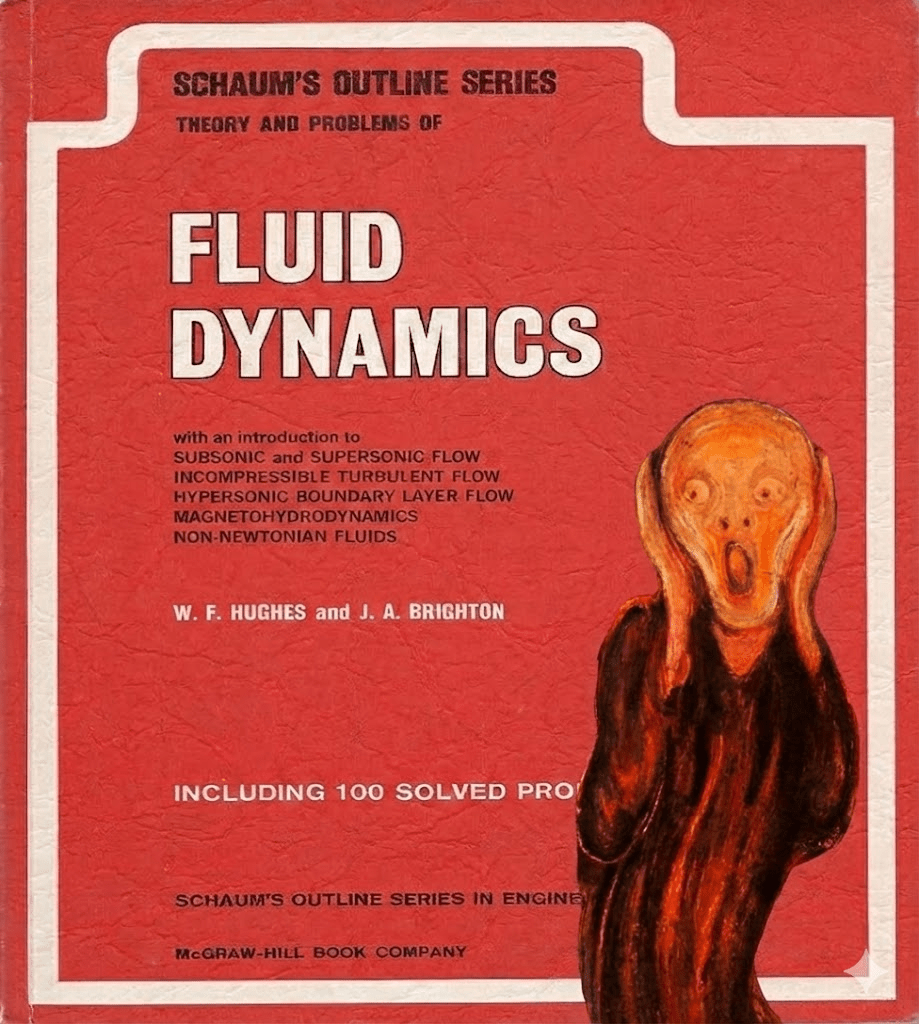
They say you never use what you learn in school – I wish
I considered this my first real engineering job. I was designing something! Holy crap!
However, over those eight months, I learned a critical truth:I was good at coming up with creative ideas, but my execution was weak. I would rush headlong into a solution, only to step back a week later, check the formulas from the textbook, check the math, and find a mistake.
When you are trying to squeeze a ton of equipment into the smallest space possible, you don’t want to find a math error that makes forces you back to step 1 of the design process. I found I was really good at finding my own mistakes and starting the design over, and over, and over. Let’s just say, 8 months in, I had good concepts but could never get the math to work within all the constraints.
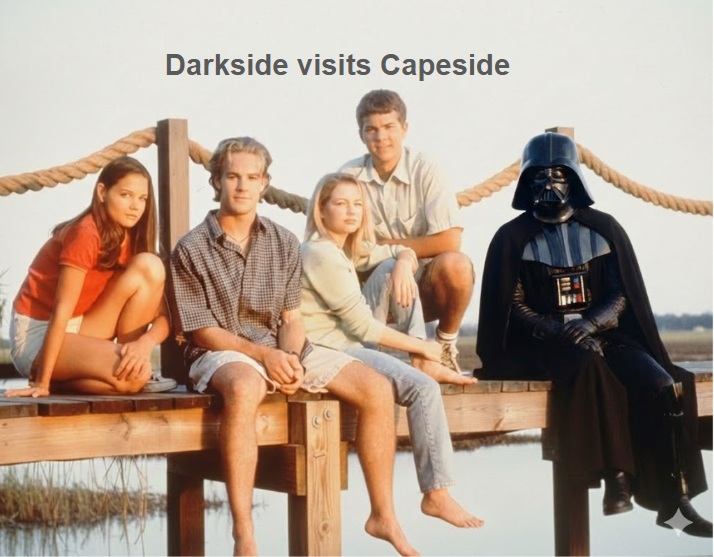
- Career Lesson #2: Vader does not like low-level detail-oriented work.
- Career Lesson #3: Vader does not want to be a mechanical designer—ever.
The Inflection Point
At the 8-month mark in Denmark, I got a call from the company back in North America, where I had done my internship. They had not hired me when I graduated because I was ranked in the middle of the pack of the 80 internship students they took in each year. But the company had a big problem with one of the manufacturing processes that I was considered an expert in. In manufacturing I was good at getting around problems and it required less math.
It was a job that I was good at but wasn’t really interested in doing again. If I had learned Life Lesson #2, I might not have taken the job. But because I was security-motivated, and it was a well-paying job back home, where my girlfriend was, I took it.
I took the path of least resistance. If I had turned the job down, and had stayed single, I cannot predict where my career would have taken me. I may never have come back to North America. That first job out of school or even in coop can set your career path for the rest of your life. You typically get hired for the experience you already have on your resume. Thirty years later I am working in a field that relates back to my first co-op.
- Life Lesson #3:There are only a few big inflection points in life. Recognize them, and don’t always take the path of least resistance.
- Career Lesson #4: Be careful with the first job you take. It can very easily lead to a 30 year career in the same field
So, with a job offer in hand, I was off to my first well-paid engineering job back in North America.

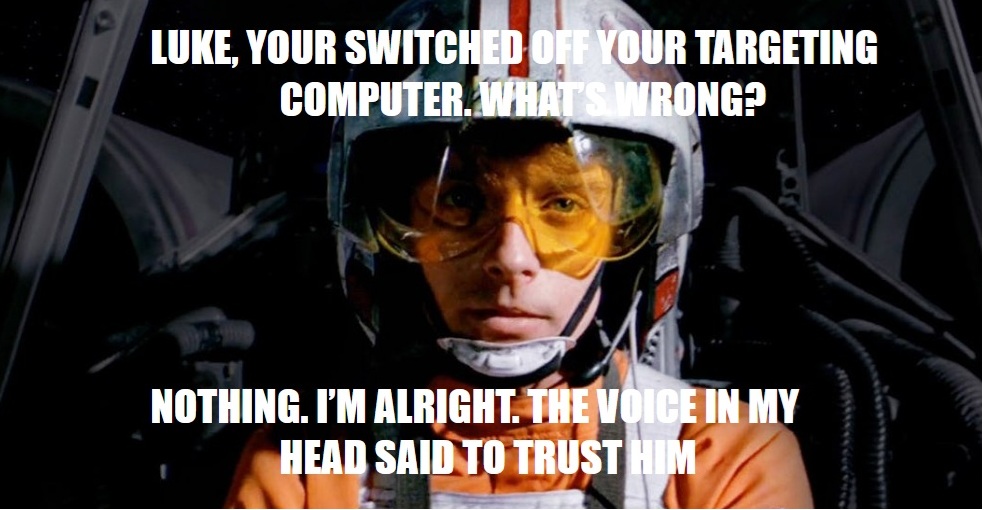
A Jedi would never have taken the easy path






 vaderonfire.com
Leave a comment